The launch of Artemis II is imminent.
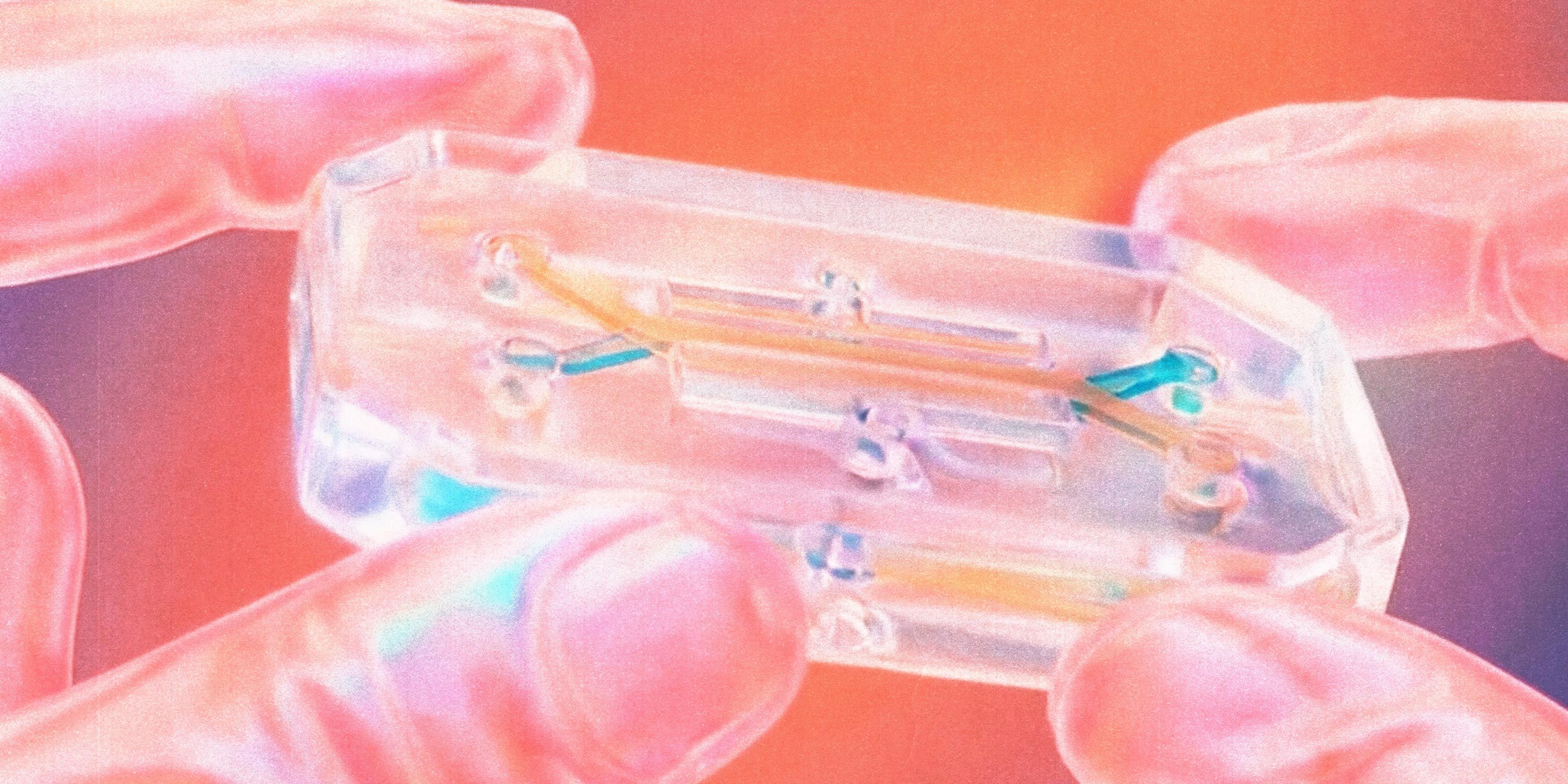
Reid Wiseman, Victor Glover, Christina Koch, and Jeremy Hansen are ready to loop around the Moon, a feat not attempted since the Apollo era, and one that could see them travel further out into space than any humans in history. This is all common knowledge. What isn’t, though, is that they are taking something exceedingly strange-sounding on their voyage: four organs — specifically, bone marrows, made from their own cells — on a handful of chips the size of USB thumb drives.
These organ chips, as they’re known, aren’t just petri dish-like samples of cells. They are “completely functional” as living bone marrow, says Lisa Carnell, the Division Director for NASA’S Biological and Physical Sciences Division.
While out in deep space, the Artemis II astronauts are showered by intense radiation — not just from our Sun, but from the rest of the cosmos. While they won’t be put in lethal danger, it will have a deleterious effect on them. And although their health will be monitored during the mission, their bone marrow organ chips will provide a precise measure of how that radiation impacts a fundamental part of their biology.
This sci-fi-sounding experiment is known as the A Virtual Astronaut Tissue Analog Response, or AVATAR investigation. Organ chips have already revolutionized medical research here on Earth. They’re now set to do the same for the Artemis generation of astronauts.
“The most precious thing we send into space is a human. We have to do everything possible to protect them and make sure they come home healthy,” says Carnell. “This is one of the most powerful tools we’re going to have at our disposal to allow us to do that.”
We already know spaceflight does peculiar things to the human body. Without an Earth-level gravitational pull, load-bearing bones like your legs and spine do less work, which reduces their density. Muscles lose mass. Your neurological networks are positively befuddled by the lack of clear orientation and floating about. The backs of your eyes can swell up. Your heart can start beating out of sync, and your ability to process oxygen drops. It can be harder to go to the bathroom. Your immune system can weaken, allowing dormant conditions to come to the fore or opportunistic, hitchhiking microbes to attack you more effectively.
Medically, it can be a bit grim — although it’s worth saying that nobody has perished in space, despite a few sketchy moments. That doesn’t stop astronauts from flying forth, though, because space is just as starkly beautiful and revelatory as it is dangerous.
Whether they are making a short trip or spending several weeks or months up on the International Space Station (ISS), a healthy astronaut is a happy astronaut. That’s why NASA employs several methods to keep an eye on them — from sensors that actively track things like heart rhythm and blood oxygen to samples of things like blood, saliva, and urine that are taken before and after their space adventure.
The Artemis II astronauts are no exception to this forensic analysis.
They will be the first humans to venture to the shadowy space behind the Moon since the 1970s; consequently, they will be exposed to plenty of radiation on their 10-day slingshot. Their saliva will be collected and stored, while wrist monitors will track their sleep and movement. A few experiments during the flight will also chronicle changes to their immune system and their ability to perform both as individuals and as a team.
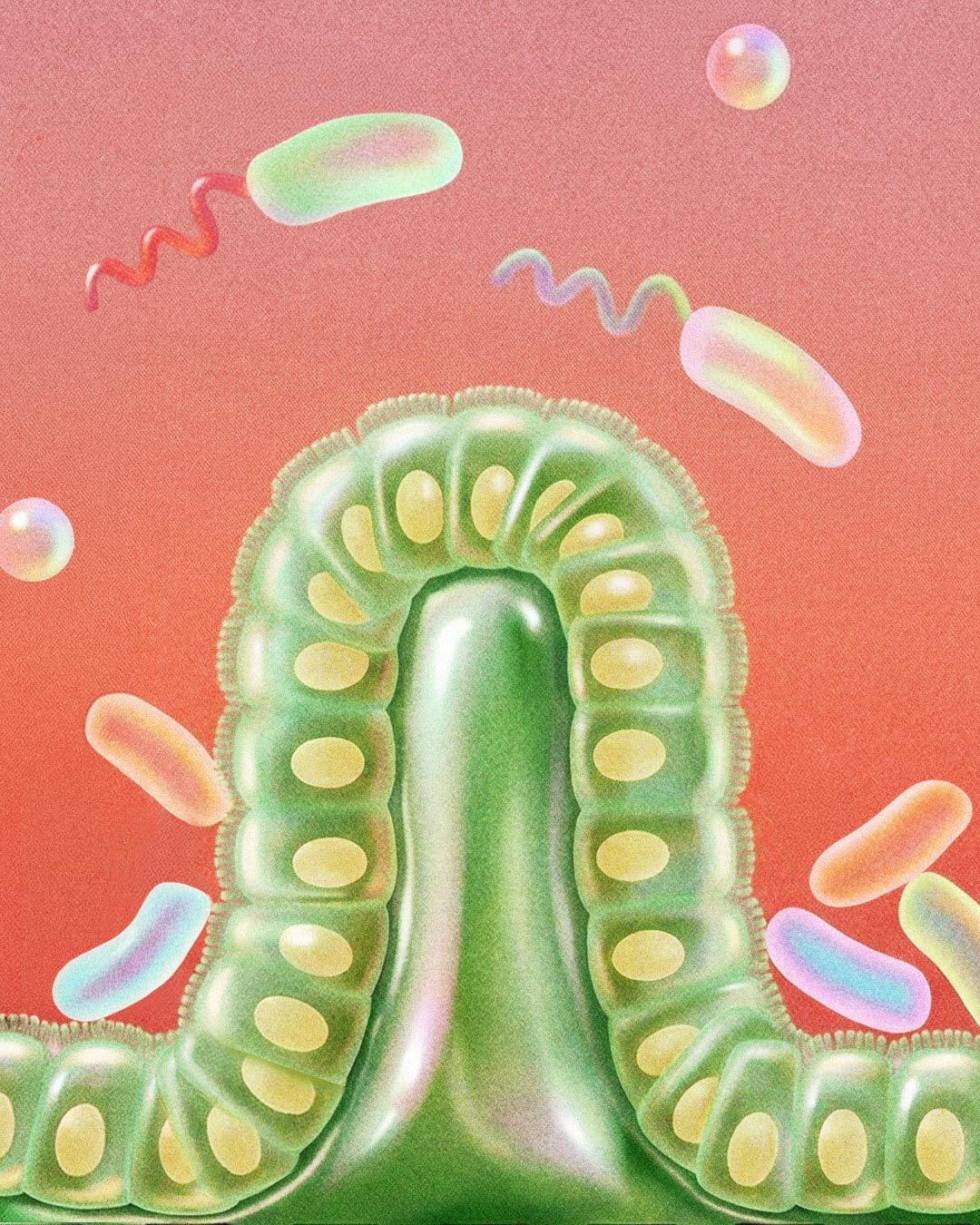
The AVATAR program, though, is where things take a big leap forward.
Organ chips are collections of cell types through which fluids can flow. This simulates their existence in a living creature or person, and without much prompting, those cells just do what they have evolved to do. “If it’s a lung on a chip, it literally breathes. A heart — it functions with the same electrical output that a heart tissue would,” says Carnell.
They aren’t fully grown, fully formed organs. They “just mimic the physiology and function of the organ you’re representing,” says Carnell. Despite their quasimagical-sounding nature, organ chips themselves aren’t even that new; they’ve been used for years in biomedical and pharmaceutical research.
Say you wanted to see how good lungs are at clearing out airways. Add respiratory cilia cells (little hair-like projections) to an organ chip, flood the channel they are in with fluorescent beads, and watch: the cilia jiggle about to expunge the alien beads, “and this simulates the mucus clearance that normally happens in your lungs,” says David Chou, the principal investigator of AVATAR at Harvard’s Wyss Institute. “When you infect the chip with influenza, you can see the virus killing epithelial cells.” You can then add an antiviral drug to see how the cells perform with bolstered defense stats.
Organ chips can also be linked up, like squelchy Lego pieces.
That lets scientists look at how multiple interlinked simulacrums of organs respond in unison to, for example, a drug designed to help ailing hearts. Does that drug also have an inadvertent effect on the liver or the pancreas?
When Carnell saw organ chips begin to proliferate in the early 2010s, she knew that she had to get a hold of some to examine the health of astronauts. This was clearly “game-changing technology,” she says. An early idea: use lung chips to assess the harms of the glassy, corrosive lunar dust. She didn’t get her chance to try this out back then, but organ chips have since been sent up into space to the ISS.
AVATAR (a partnership between NASA and various industry partners) is trying something brand-new — and not just because these chips are the first to reach deep space and that unique radiation environment. Instead of sending any old cells up, NASA thought, “What if we could make them out of the crew themselves?” says Carnell. The Artemis II squad was game. “They were so excited.”
“This is the first time we’re going to have crew with their matched organ chips,” says Chou. That means that the results of AVATAR can be compared with the various samples given by the astronauts. Do the cells in both show similar changes when exposed to cosmic radiation? If so, it will confirm that organ chips work wonders in deep space.
These chips will feature bone marrow, the weird organ that fills the cavities in your skeleton.
“The primary function of the bone marrow [is] to produce the red and white blood cells in your body,” says Chou, as well as platelets. “The bone marrow produces hundreds of billions of cells every single day, so that’s on the order of the number of stars that are in the Milky Way. So your body produces a galaxy of blood cells every single day.”
Red blood cells carry oxygen, white blood cells fight against pathogens, and platelets control bleeding. In other words, bone marrow is extremely important to the function of pretty much everything else in your body. It also happens to be particularly sensitive to space radiation. “We’re maximizing the chance that we’ll see biologic differences, as opposed to modeling the skin or something else,” says Chou.
The chips will be placed atop a shiny metal box that will operate autonomously within the Orion astronaut capsule. Unlike on the ISS, which has power sockets, this experiment will be battery-powered. Devices within will monitor and regulate the microenvironment to try and ensure that small bubbles don’t form, which can break the chips. “There’s a non-zero chance that one or more chips may fail mid-flight,” says Chou. “We’ll have to see.”
Aside from the chips visiting the Moon, other models will be running on the ISS to get a low-Earth orbit radiation comparison. The radiation environment within the Orion capsule will also be artificially recreated at NASA’s Space Radiation Laboratory in Upton, New York, which will then be subjected to additional astronaut bone marrow.
How does bone marrow hold up against the savages of spaceflight?
Thanks to Wiseman, Glover, Koch, and Hansen, we’ll know better than ever before. And that’s just the beginning. What if you want to know how future astronauts will respond to being off-world for several weeks or months? “We could send [organ chips] out ahead of time, made from those crew members, and understand what might happen,” says Carnell.
Support Supercluster
Your support makes the Astronaut Database and Launch Tracker possible, and keeps all Supercluster content free.
SupportEveryone is different: some will hold up better against things like radiation, while others will suffer a little more. These organ chips can suggest the sorts of treatments or medications they may need to keep them safe and healthy. You can’t just send every type of medicine into space, not least because small increases in mass equate to large increases in launch costs. But organ chips could lead to the development of personalized medical kits for individual spacefarers.
If NASA manages to set up a sustained presence on the lunar surface, then it won’t be too long before visitors who aren’t professional astronauts will pay it a visit. “Being able to understand how a broader representation of the public would respond to spaceflight is something you could do with organ chips much more cost-effectively,” says Chou. “You can make hundreds of these and send them up.”
If AVATAR succeeds, it won’t just be NASA’s triumph. It’ll be important to anyone — from lunar engineers to bougie tourists — with dreams of bouncing across the Moon. “I’m so excited, I can’t even put words to it,” says Carnell.