Courtesy of NASA
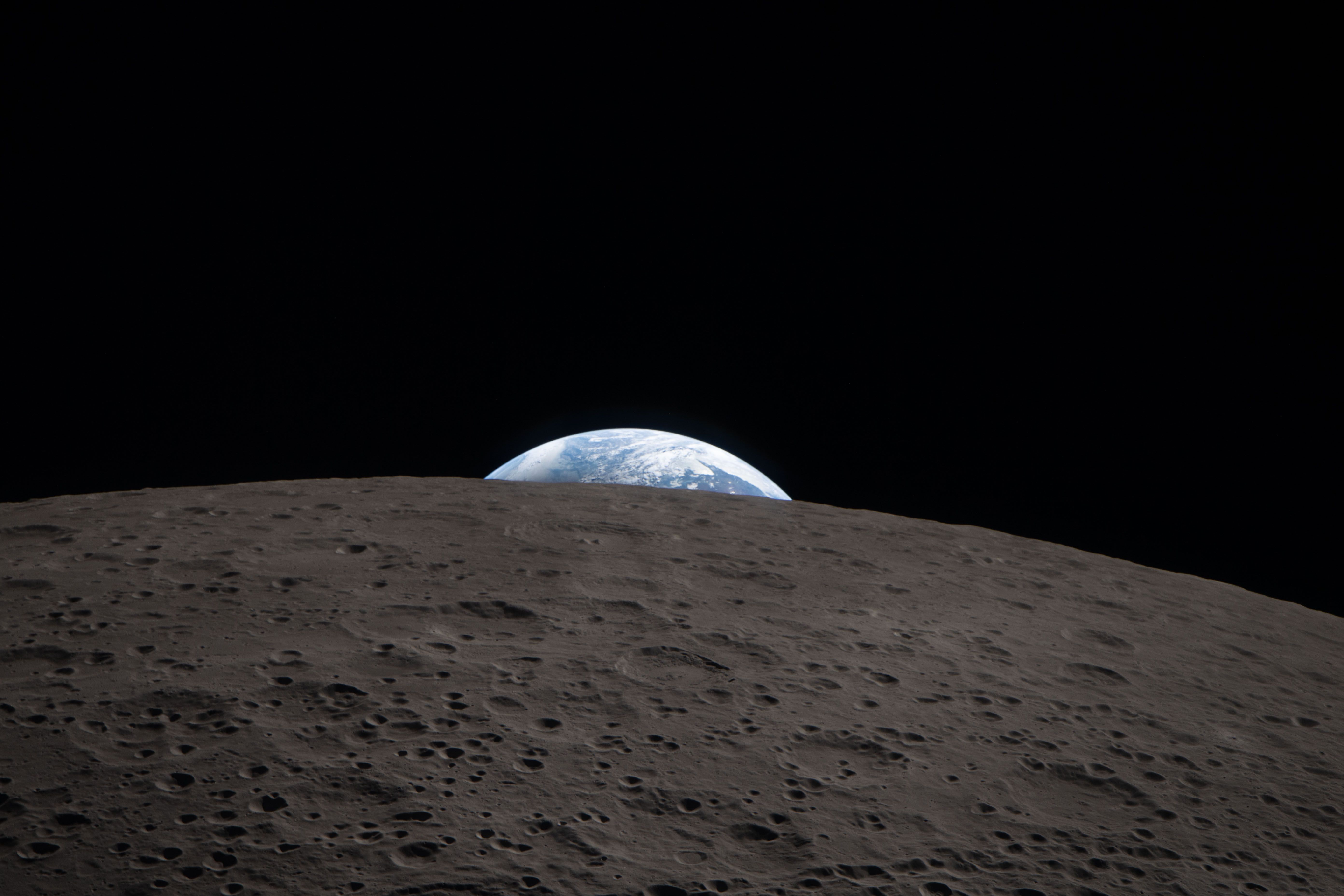
Of the many accomplishments of the successful Artemis II lunar mission, shooting an Earthrise photograph was one of the most eagerly awaited.
The resulting ‘Earthset’ image is a landmark photograph, but perhaps not in quite the same way as Earthrise was.
Instead, the two images could be seen as bookends for events here on Earth, and Earthset’s importance has echoes both into the past and into the future.
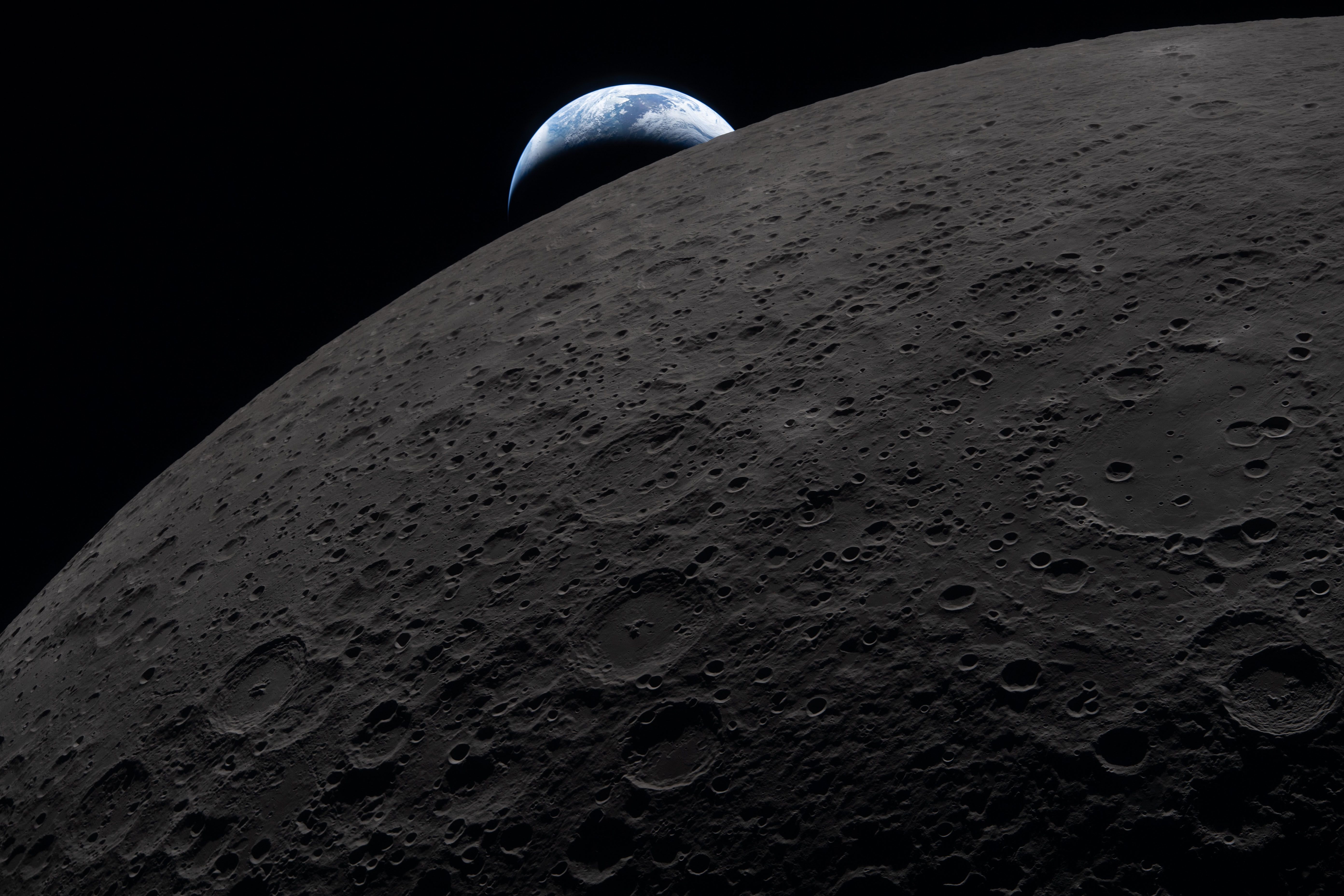
If you followed the Artemis II mission with any interest at all, you’ve probably seen the Earthset image by now. It captures a crescent Earth about to dip below the horizon of the Moon as Artemis II’s Orion capsule, named Integrity by its crew, was about to voyage around the lunar farside. We see the illusion of one of the crescent Earth’s ‘horns’ appearing to touch the lunar surface, and white billowing cloud swirling over Earth’s blue.
It’s a romantic picture that hammers home how small our world is, and how far away the Moon is from it.
Courtesy of NASA
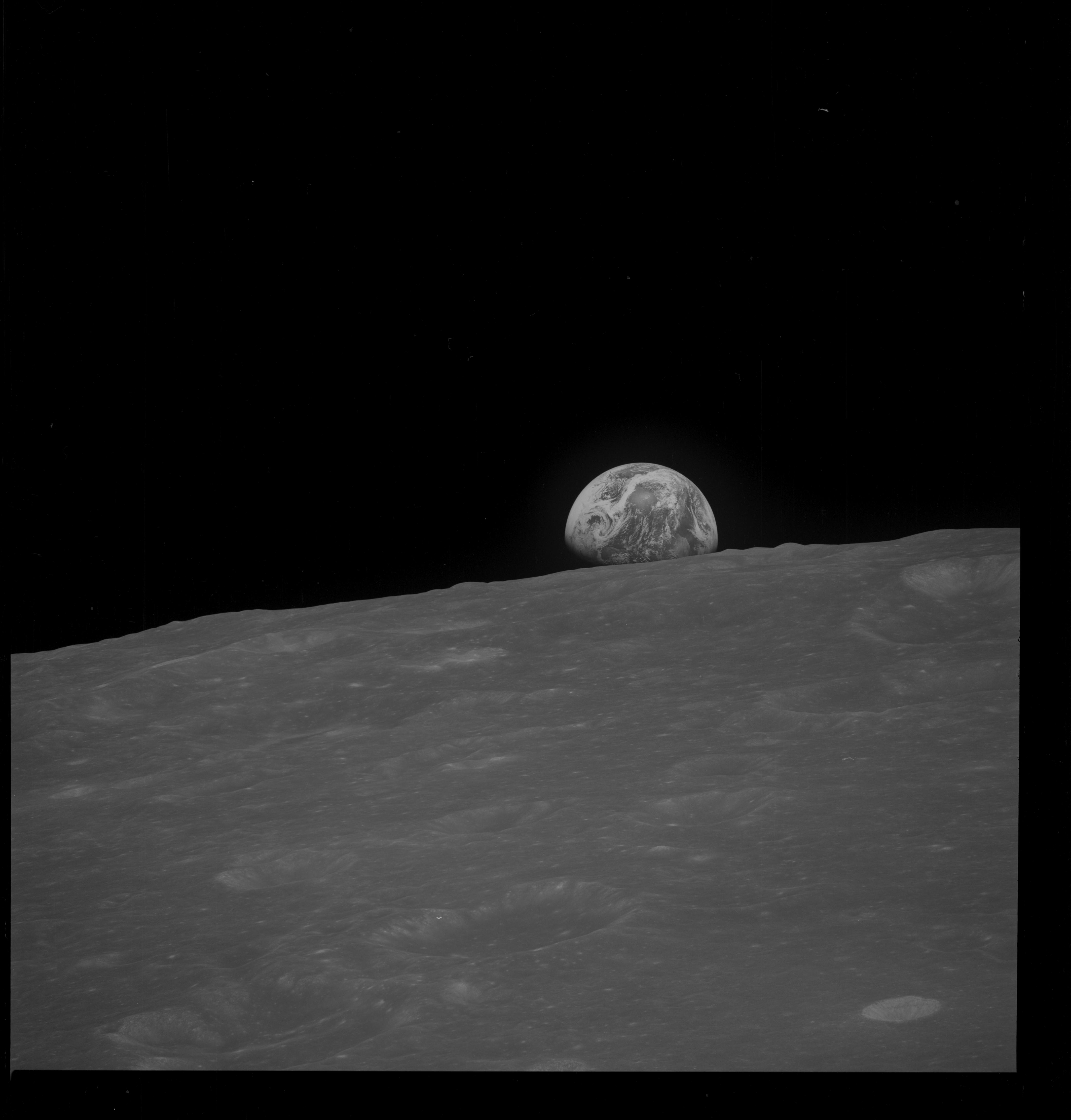
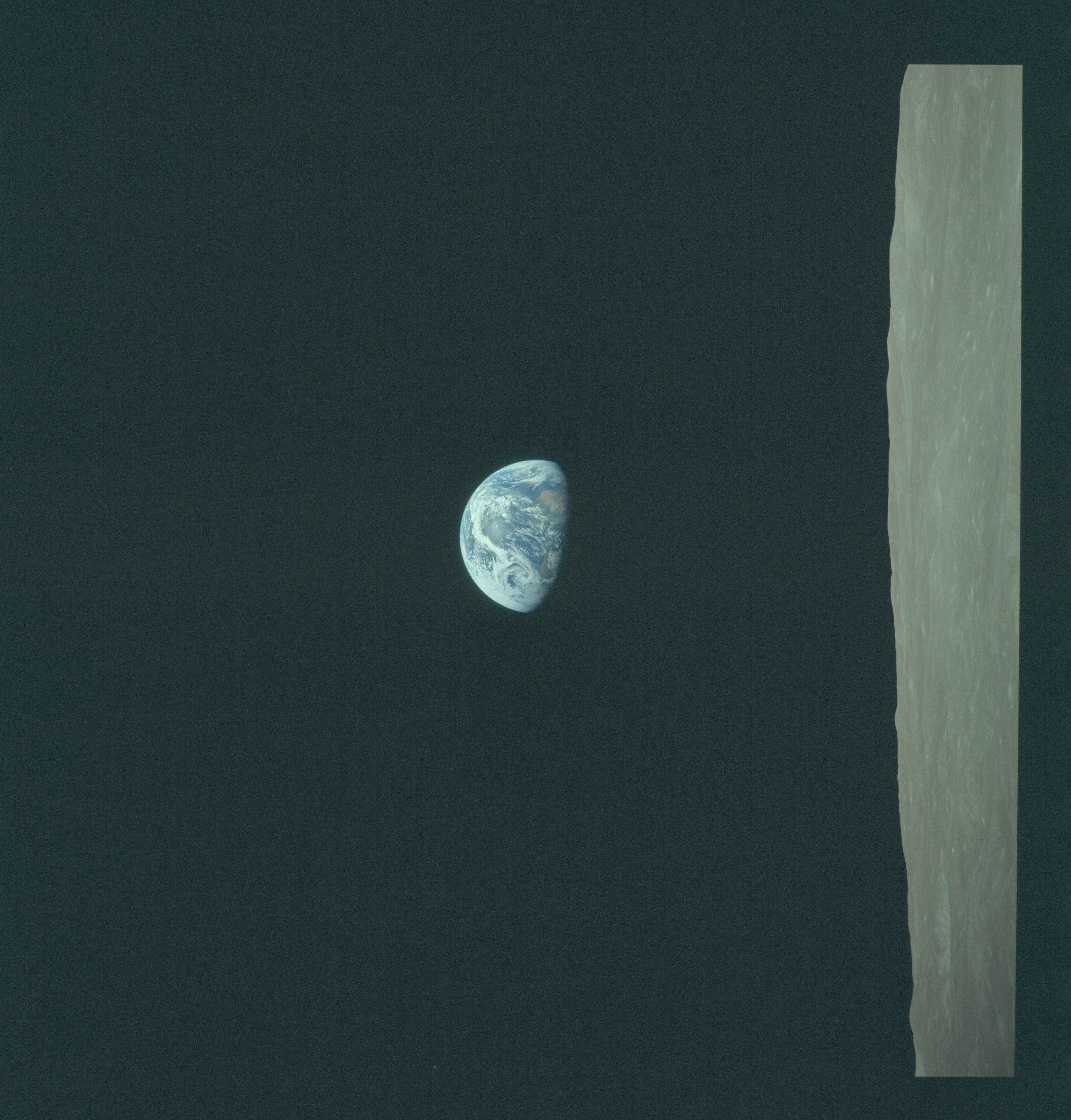
The original Earthrise photograph had an impact that almost transcended the Apollo missions themselves. It wasn’t the first picture of Earth taken from space, but those taken before it had largely gone unnoticed by the public. When Earthrise was taken by Apollo 8 astronaut Bill Anders on Christmas Eve of 1968, it became a call to arms for the burgeoning environmental movement and offered a new way of looking at the world geopolitically. Earthrise showed a world without borders, transcending nationalism to spell out how we all live on this one planet, alone in space, and that we must work together in sharing and protecting our limited resources if we are to survive.
The tremendous impact of Earthrise was partly due to timing. It came when there was civil strife and anti-war demonstrations in the United States, who were embroiled in a pointless conflict in Vietnam while collectively being shocked by the assassinations of Martin Luther King and Robert F. Kennedy. As someone quipped, the Apollo 8 mission, with its reading from Genesis on Christmas Day, the first crewed orbits around the Moon, and the Earthrise photograph, saved 1968 right at the end.
It was also near the beginning of an underground movement to champion our planet’s environment and natural wonders in the face of deforestation, devastation, pollution, and a gradual awakening to the possibility of catastrophic climate change, as captured in the lyrics of Joni Mitchell, the conservation work of Dian Fossey, or in the pages of Rachel Carson’s Silent Spring or Stewart Brand’s Whole Earth Catalog. Earthrise was subsequently used as the logo for the very first Earth Day in 1970.
The Miracle of Earthrise
Given all that, as a sequel to Earthrise, Earthset has a lot to live up to. Rather, mechanically taking another photo of the Earth above the Moon’s horizon is not, on its own, sufficient to replicate the remarkable influence that Earthrise has had. Yes, Earthrise was an extraordinarily beautiful photo, but as we’ve seen, its tremendous impact wasn’t just down to aesthetics.
It tapped into the zeitgeist in a way that few photographs taken in space have.
The story goes that Earthrise was taken purely by chance, when Apollo 8 crew member William Anders happened to see the Earth through the window of the capsule during the crew’s fourth orbit around the Moon. Anders was so struck by the sight that he referred to Earth as being like a “Christmas tree ornament, very fragile.” Anders, mission commander Frank Borman, and command module pilot Jim Lovell had been tasked with photographing surface features, and so they had to pivot quickly to capture Earth rising, but it’s a myth to suggest they were not supposed to have imaged it.
“The Apollo program had a wonderful director of photography called Dick Underwood, and he envisaged that they would see the Earth rising and he even mentioned it in a press conference before the launch,” says Robert Poole, who is a historian and professor emeritus at the University of Lancashire in Preston, UK, and the author of the book Earthrise: How Man First Saw the Earth.
Poole continues, “But you can get a measure of how unimportant it was in practical terms because [the astronauts] simply forgot and had mentally pushed it to the bottom of the list.”
After nearly six decades of Earthrise fertilizing the minds of environmentalists, futurists, space enthusiasts and those who just like cool posters on their wall, NASA needed no reminding to prioritize taking a similar image during Artemis II. As Integrity approached the far side of the Moon, mission specialist Christina Koch snapped many images of the crescent Earth, horns pointed towards the lunar surface, as it gradually slipped — or set — over the horizon and communications with our planet were temporarily cut off.
The Meaning in Earthset
Earthset is a stunning image, but does it — can it — mean as much as Earthrise?
In some ways, no. Earthrise was a pleasant surprise that gradually made its way into the public consciousness in an era long before social media, whereas Earthset was an expectation even before Artemis II blasted off. The stunned reaction to seeing something that you never expected to see simply isn’t there with Earthset.
What meaning we can glean from both Earthset and Earthrise is highly dependent on the circumstances in which they were taken. In both cases, those circumstances are very similar, yet also very different.
Courtesy of NASA
We have seen how, when Apollo 8 flew to the Moon, it was a time of war, civil strife in the United States, and a growing awareness of the environment. When Artemis II flew to the Moon, it was also a time of war in Iran, in Gaza, in Ukraine, in Ethiopia, in Uganda, and elsewhere. It was also a time of civil strife with an increasing threat from the far right, while awareness of the environment is through the roof, but not that the powers that be are doing anything about it. So to summarize, both eras were difficult periods in history.
Steeped in optimism, Earthrise promotes the message that for all our troubles, all our mistakes, the Earth and humanity can rise up and become something better.
Yet this sense of hope that Earthrise engenders contrasts starkly with the palpable sense of hopelessness with Earthset. In the UK, the free newspaper The Metro summed it up by featuring Earthset on its cover in a contrast to the threats made to annihilate Iran, with a message that resonated: ‘Humanity’s historic new view,” it read,“… of a world in deep trouble.”
Part of that sense of hopelessness stems from the photograph’s name.
“‘Earthset’, as a name, is a terrible concept!” exclaims Poole. “The setting Earth implies the end of an era, the end of the Earth, it’s an appalling thought!”
On the other hand, ‘rise’ implies the beginning of an era, a new dawn, a promise that things are going to get better. Earthrise was the poster child for environmentalists, futurists, activists and dreamers. While Earthset may end up as a poster on many people’s walls, tits inherent message feels more foreboding. It’s a warning that night is falling.
Support Supercluster
Your support makes the Astronaut Database and Launch Tracker possible, and keeps all Supercluster content free.
Support“Apollo 8 happened pretty much at the peak of the Space Age and the beginning of the environmental age,” says Poole. “Now here we are at the end of the post-war order and everything is falling apart, all the international institutions, the rules, they are all collapsing and the world is going to be different. Someone is going to write a history text on the period from Apollo to our age, and it’s going to be called From Earthrise to Earthset.”
Hello, World
The end of one era usually signals the beginning of another, and while Earthset is a bookend to the previous era, a different image taken during the Artemis II mission could help define the new era.
Courtesy of NASA
Not long after Artemis II’s Orion capsule had fired its engine to leave Earth orbit and head for the Moon, mission commander Reid Wiseman turned his Nikon D5 camera back towards our planet. He was looking at the night side, our world backlit by the Sun but illuminated by ‘moonshine’. It shows the Atlantic Ocean, and parts of Africa and South America. Earth’s atmosphere wraps around the planet in an impossibly thin layer, colored by the hues of aurorae and airglow, the sparks of tiny satellites catching the sunlight and glinting above the planet. An animated version assembled from numerous exposures stacked together shows these satellites in motion, a swarm buzzing around Mother Earth.
The photograph was called ‘Hello, World’, which is a name that Poole dislikes, finding it cringeworthy and symptomatic of the selfie generation.
However, Hello, World seemed to strike a chord with younger people following the Artemis II mission on social media – the selfie generation, yes, but they are also the next generation that will take us forward into whatever new era is on the horizon, so whatever works to inspire this younger generation has got to be a good thing. The name ‘Hello, World’ also has a double meaning – it’s the name of a simple computer program, the first that programmers often write when learning a new coding language. As such, ‘Hello, World’ has come to symbolize the transition into a new technology or a new era. The naming of Wiseman’s image implies that Artemis II heralded a new era for lunar exploration and spaceflight, but it could come to herald more than just that, but rather symbolize a whole new era in which looking after Earth and saving its environment must come first.
When we look back to the reaction that Earthrise garnered, it caught some space visionaries off guard, says Poole.
“Before 1968, visionaries such as Arthur C. Clarke thought that when we saw the Earth from space, the whole public would understand that Earth is just our cradle, and that we were now growing up and leaving the cradle,” he says.
Futurists envisaged that it would symbolize saying goodbye to Earth, at least in a metaphorical sense. Given Earthrise’s importance to the early days of the environmental movement, we now know that the general public’s reaction was quite the opposite, focused not on leaving Earth, but on saving it.
Hello, World is quite literally saying hello, not goodbye, to the Earth.
It’s acknowledging not only the 8.3 billion people who live here, but all life on what is a living planet, with activity on the surface, in the atmosphere and in orbit. In Hello, World, the rest of the Universe fades into the background and the focus is on Earth as our special place, one that in the new era we must protect for all our sakes.
Courtesy of NASA
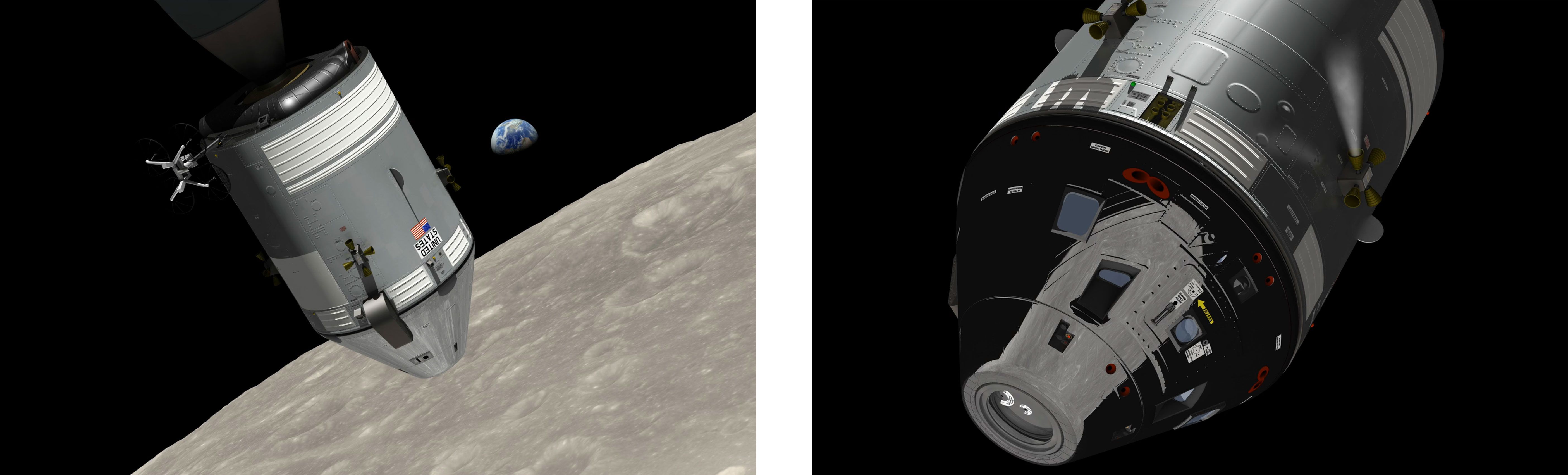
The new era of the 21st century does not need to be purely inward-looking. For us space cadets, Artemis II’s imagery offered some hope for a future among the stars. As Integrity rounded the Moon, Koch started clicking her camera long before Earth was nearing the lunar limb. From her vantage point over 6,500 kilometers above the lunar surface, Koch photographed both the Moon and Earth just hanging alone in space.
“They look like two pebbles floating in space,” says Poole of the Earth and Moon in those photographs. “I blew those photos up on my computer screen and turned the lights off to make it as much like space as possible.”
It’s those photographs showing the Earth and the Moon as just pebbles on the cosmic shoreline that best embody the original hope of futurists that images of Earth from space will show us leaving the cradle. The truth is, we’ve been out, just a little way, before running back home. We’re not ready. Perhaps if the Artemis program is successful and NASA builds a base on the Moon, along with a Chinese base and perhaps others, we can start to think about taking permanent steps away from the cradle. Yet we will always be anchored to home, anchored to Earth, because if Earth fails, then no one will leave the cradle.
It’s just as Bill Anders said: “We came all this way to the Moon… and yet the most significant thing we’re seeing is our own home planet, the Earth.”
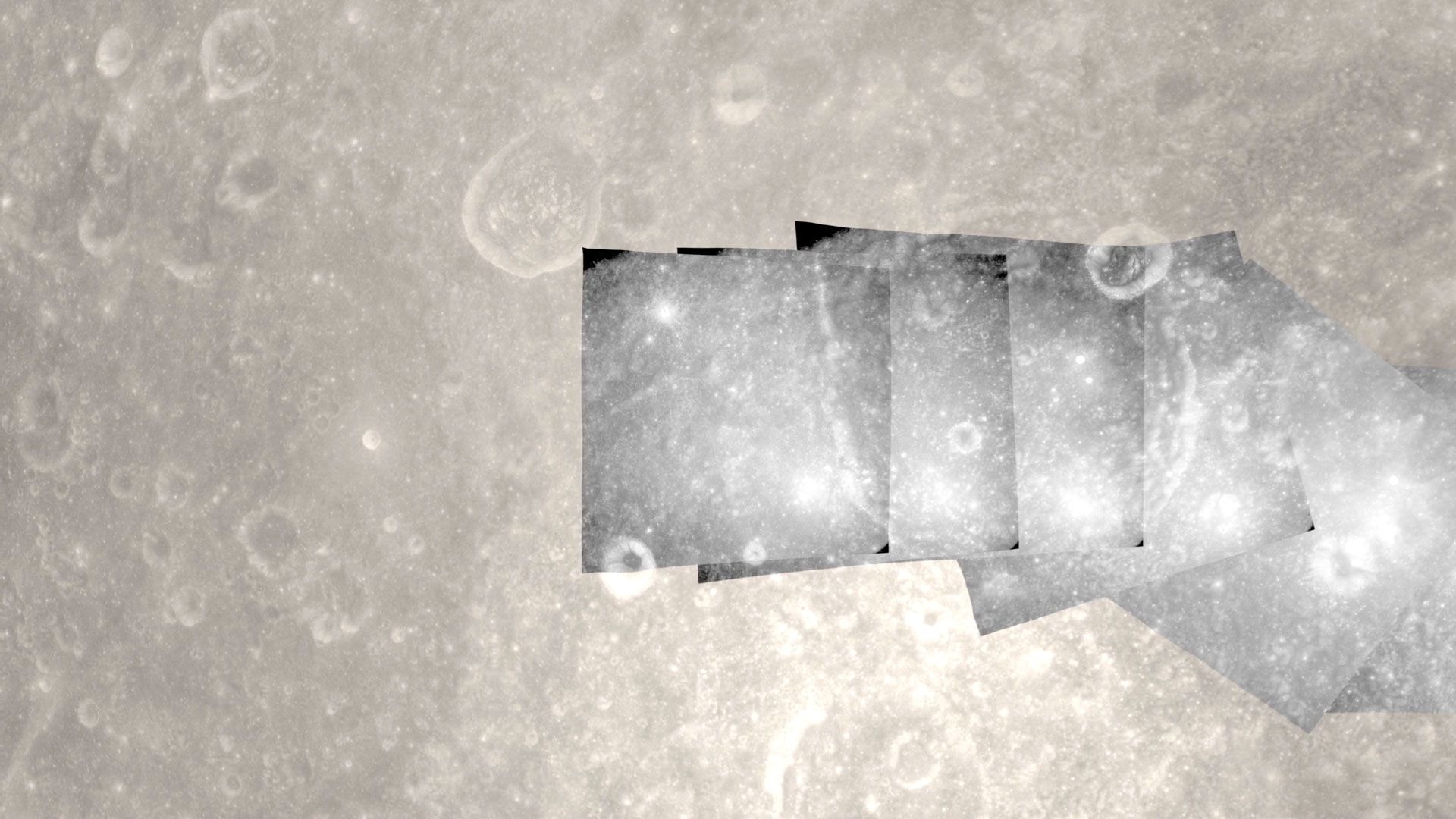
Click here to view NASA's Earthrise in 4K Visualizer.
Courtesy of NASA