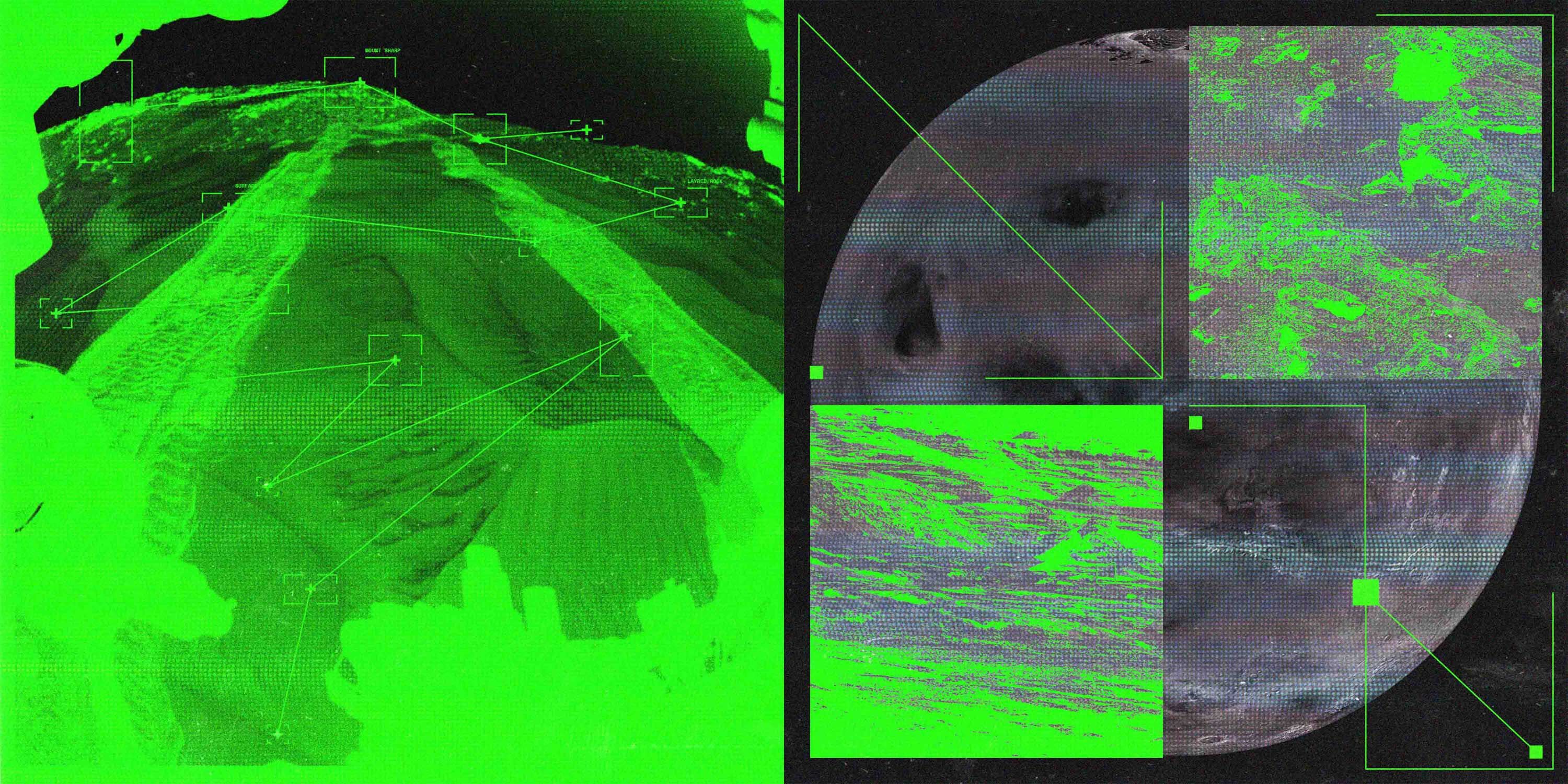
After 5,000 Martian days, Curiosity’s search for life will help a new generation of spacecraft.
In the last 5,000 days (or sols) on Mars, the Curiosity rover completed nearly a marathon’s worth of traversing on the Red Planet — and its science is just getting more intricate as the years, and the rover, both roll on.
Curiosity launched with what sounds like a simple question: was there enough water and other ingredients to keep life going on the Red Planet, once upon a time? Within weeks of landing in August 2012, hope of finding something interesting accelerated — the rover found an ancient streambed, which ran at least ankle-deep. Scientists were excited, but cautious.
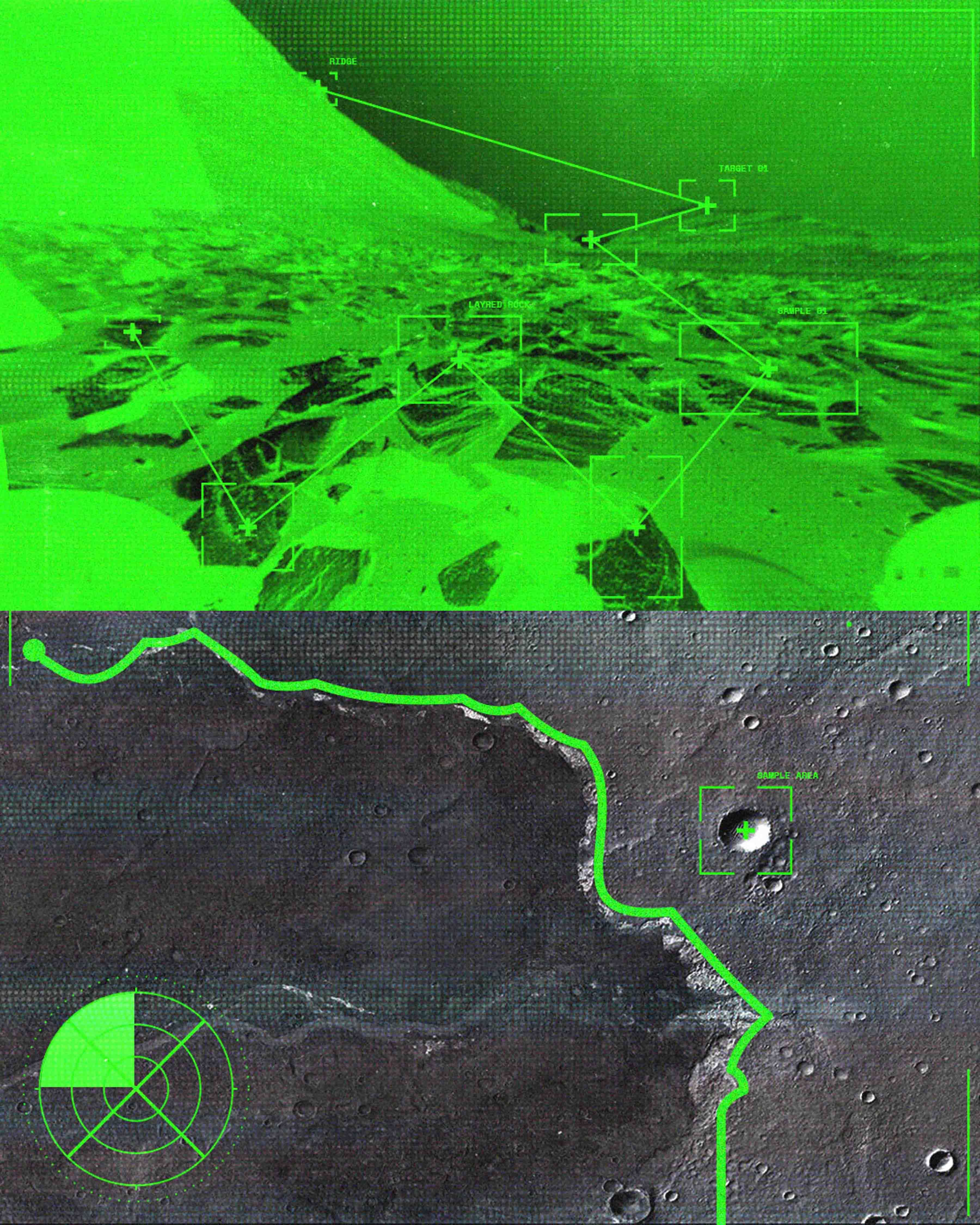
“This is insurance that we have already found our first potentially habitable environment," said John Grotzinger, then project scientist for Curiosity’s mission, known as the Mars Science Laboratory. But ambitions ran even deeper than the stream — the rover was bound for a challenging climb, at a nearby mountain rising 3.4 miles above the surface, where investigators hoped to find precious organic materials possibly indicating signs of life.
That destination was Aeolis Mons, known more casually at NASA's Jet Propulsion Laboratory (JPL) as Mount Sharp after American geologist Robert P. Sharp (1911-2004) — a Mars scientist at the California Institute of Technology that manages JPL. Sharp was there when early Mars missions revealed a bunch of watery surprises, including signs of glaciers, frozen terrain, and the shorelines of ancient lakes. And shortly after Sharp’s death, a pair of small NASA Mars Exploration Rovers (MERs) called Opportunity and Spirit uncovered even more signs of water at two distinct landing sites, including “blueberries” of hematite formed in standing pools of water.
Curiosity would bring that understanding further.
The nuclear-powered rover is twice as long and four times as heavy as the golf-cart-sized xMERs, and comes equipped with then state-of-the-art instruments allowing it to peer far into the distance with cameras, and to analyze samples on site using a drill and a portable “oven” of sorts that can look at the off-gassing of ingredients. With larger size came much bigger ambition, as Curiosity would need to gradually scale up Mount Sharp, where organic materials would be safer from today’s wind — and ancient flowing water on the surface — that swept them away.
Yellowknife’s Habitability Side Quest
Investigators had to make tough choices on the two-year (in Earth years) journey to Mount Sharp. Press too fast and they would miss interesting science on the floor of Gale Crater. Indeed, investigators spotted something interesting in a zone informally called Yellowknife Bay that caused them to take a year-long detour on the journey to the mountain.
“Just upslope from it were what looked like ancient streambeds and fluvial channels — evidence for flowing water in the ancient past. So the idea was perhaps flowing water might have ponded in this low-lying area, and that's what we wanted to investigate,” Ralph Milliken, a participating scientist on the mission, told Brown University in 2012 — where he was then assistant professor of geological sciences.
Aside from the water, scientists wanted to side-quest the zone to check out the “ground truth” of what satellites spotted from orbit — especially what the underlying bedrock would reveal.
Support Supercluster
Your support makes the Astronaut Database and Launch Tracker possible, and keeps all Supercluster content free.
Support“We made the decision to drive in the opposite direction from Mount Sharp,” Milliken said, a risky decision that paid off big because the team pumped out six scientific papers in the prestigious journal Science relatively quickly after the detour.
“What we found at Yellowknife Bay well surpassed our wildest imaginations for this early in the mission,” he added. “We found evidence that there were mudstones, which are the kinds of rocks you might find in lakebeds on Earth. So it appears as though there may have been an ancient lake.”
But slow down for too much sightseeing, and scientists would risk not making it to the mountain in time to start collecting valuable science — fuel not only for pure knowledge, but also to make the case that Curiosity would deserve funding for an extended mission based on its scientific productivity. And that mountain had to be looked at, because it was the main argument for Curiosity’s long journey to the Red Planet. So the rover team pressed on, at last making it to Mount Sharp on Sept. 11, 2014.
The Making of a Mountain
As Curiosity rolled up to the foot of the mountain, the images transmitted a strange story to the watching geologists: “Our team started noticing distinct patterns on the rocks around us. There were tilted beds of sandstone all facing south in the direction of Mount Sharp,” said Ashwin Vasavada, then MSL’s deputy project scientist, in 2014.
“The geologists in our team concluded that these tilted beds of sandstone formed where streams empty into standing bodies of water, like lakes. The sediments carried by the flowing water sink when they enter the lake, forming a sloped wall that slowly advances as sediment continues to fall.”
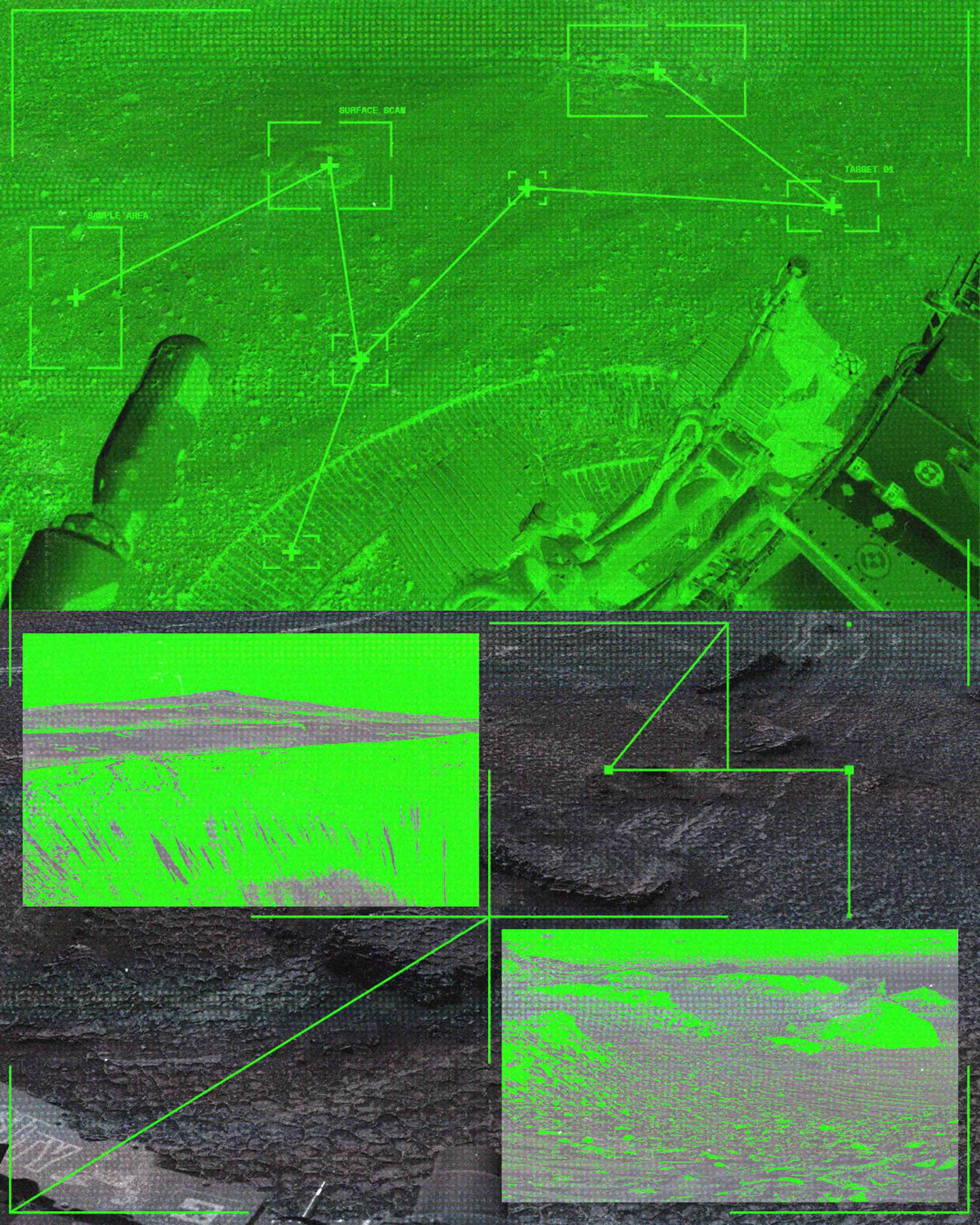
Then, scouting around the base of the mountain, Curiosity spotted rocks that are created when sediment begins to separate within a lake, on its way to forming mud. Of course, that mud is no longer wet on the Martian surface, but scientists could spot the telltale shape and chemical signs — and they also could see refined layers, showing the ancient water was changing over the eons.
Most spectacularly, Curiosity showed that 1,000 feet of vertical rock face used to be mud, and that water — draining for a billion years of time — was trickling through the layered, sedimentary rock deposited on the lake’s bottom. The climate was also swinging between wet and dry cycles for a million years, scientists found through chemical analysis.
But there was enough water, scientists later determined, for “long-lived streams and lakes” that existed roughly 3.3 billion to 3.8 billion years ago, creating sediment that put the foundation of Mount Sharp’s lower parts together. Curiosity also whipped out its drill to take several samples around the base, generating a scientific paper in July 2017 showing an abundance of life histories of the rocks surrounding the mountain.
A “primitive” source of magma near the base of the mountain was enriched in iron and basalt, like what is found in Hawaii, with materials abundant in silica just above this layer. Quartz and tridymite (which may be due to silicate volcanism, thought to be rare on Mars but which does happen at places like Mount St. Helens in Washington State) were spotted in the samples as well. Precious clay bits were also uncovered — clay being an excellent proxy for life, as it tends to form in neutral conditions (not acidic, not basic) under similar circumstances where microbes would tend to be present.
More hematite was also uncovered, yet another sign that water was present.
That’s a lot of diversity in minerals in one small area, which scientists explained in two ways: perhaps the lake water was oxidizing, or perhaps groundwater (which would have been oxidized) moved into the rock and precipitated the hematite and other minerals, like jarosite. “The environmental conditions present in the lake and in later groundwater were quite different, but both offered liquid water and a chemical diversity that could have been exploited by microbial life,” NASA stated at the time.
But Where is the Life?
The challenge of Curiosity is that as capable as the rover is, it was not designed to definitively answer the question of whether organic materials — carbon-based compounds — came from life processes, or from something else. You can think of Curiosity as a scouting mission, serving as a surveyor of the conditions under which life could form, but whether life actually was present is a whole other question.
Climbing up and up Mount Sharp for the last decade, Curiosity has seen abundant evidence that water was around the area. More clay revealed itself in abundance further up the mountain. Sulfate also showed that the climate was variable, perhaps drying over time or mainly being produced by groundwater, which shows that how water was flowing through the area was likely changing.
Meanwhile, even looking at the ground shows the promise of water, as features such as distinctive ancient-water ripples have shown up in the images. “Despite having climbed through thousands of feet of lake deposits, Curiosity had never previously seen evidence of water and waves this clear,” NASA officials stated in 2023 of the finding.
And perhaps one of the most telling signs of mud and water was a series of hexagonal cracks that Curiosity spotted, which also produced a scientific paper in 2023. “Over 11 years, we’ve found ample evidence that ancient Mars could have supported microbial life. Now, the mission has found evidence of conditions that may have promoted the origin of life, too,” stated Vasavada, who is now the mission’s project scientist.
More recently, scientists published again, showing that Gale Crater may have had “warm groundwater” for 4.7 million years, with potentially habitable conditions. This 2026 finding was based on finding not only hematite, with different sizes of crystals at different altitudes, but also goethite — a mineral commonly found near hematite, but only at higher elevations.
“What we found was that warm and wet conditions were present for extended periods in buried rocks, despite Mars’ climate becoming colder,” stated Tanya Peretyazhko, co-first author and planetary scientist at NASA’s Johnson Space Center in Houston.
But the question of life-friendly organics on the surface will need to await a future generation of Mars missions. JPL’s newer Perseverance rover is picking up samples of rock that could be analyzed one day back on Earth, but NASA’s plan to get them home ran out of Congressional support early this year, so if and how they come to Earth is an open question. That said, a long-delayed European Space Agency (ESA) rover mission, called Rosalind Franklin, may launch at last in October 2028 to follow up on Curiosity observations of organics.
“After 12 years roaming the barren Martian lands, Curiosity detected what could be the best evidence of molecular complexity required for the origin of life as we know it. The rover took a sample from a mudstone — a fine-grained sedimentary rock — and identified molecules with chains of up to 12 carbon atoms. The rock itself was rich in clay minerals, sulphates and nitrates, a good combination to host living cells,” ESA wrote last year.
Unlike Curiosity, Rosalind Franklin’s on-board laboratory includes a “Mars Organic Molecule Analyser” aiming to dive deeper into the chemical (and biological) nature of organics. In particular, scientists are hoping to find hydrocarbons called pristane and phytane, which the German space agency (DLR) says come from organisms. “If life once existed on Mars, then molecules like pristane and phytane represent important molecular biosignatures that could have survived to this day,” said Max Planck Institute for Solar System Research scientist Guillaume Leseigneur, who led a study in 2026 about the planned search.
The study did a trial run for Rosalind Franklin using analysis of a famous Martian meteorite called the Murchison meteorite, particularly searching for chirality — a reference to the structure of compounds, which come in particular configurations as it concerns life. Researchers were surprised to see the meteorite had “chiral variants of pristane and phytane in equal proportions,” but concluded the immense pressure of coming through Earth’s atmosphere must have altered the hydrocarbons.
To be sure, Rosalind Franklin — or Curiosity, or any other mission — will not answer the question of life on Mars all on its own. But the value of long-running missions on Mars is that over time, we can gradually answer questions that the mission was designed to answer, before getting set for the next generation of Mars investigators that will bring those answers a step further.
Curiosity, now well into its science-mission extension while continuing to operate well, will likely rove much further before its work comes to an end. And even after it sends the last transmission from the surface, its discoveries will be cited again and again as we get closer to finding more definitive proof of whether we’re alone in the universe — or if something else arose on a planet practically next door to our own.