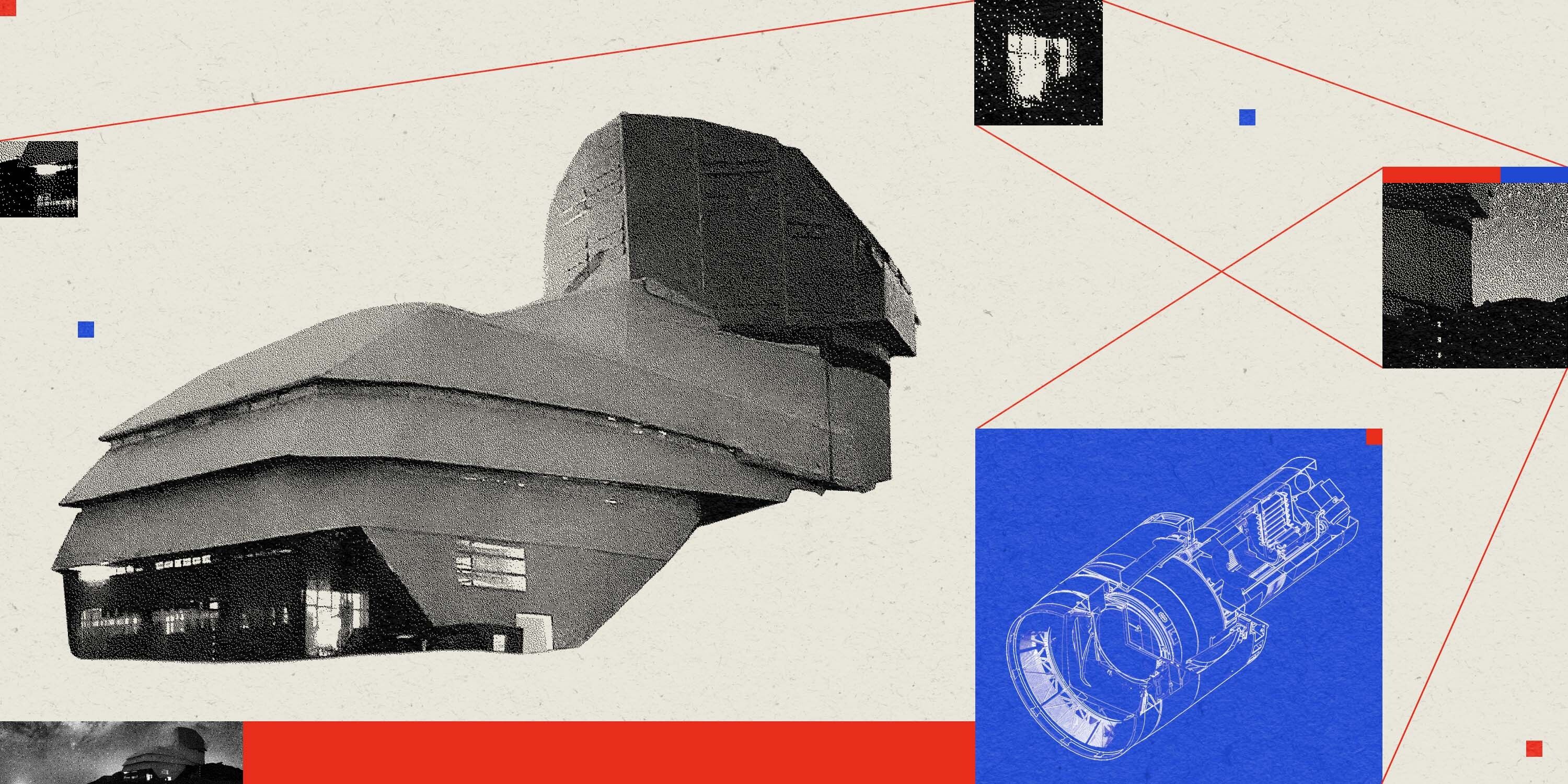
The Vera C. Rubin Observatory — Rubin, to its friends — is by far the most polymathic telescope to ever grace the face of the Earth.
From atop a mountain ridge in Chile, this rapacious device is soaking up every last drop of emitted or reflected light — luminous ink that scientists will use to paint a living map of the universe, featuring everything from far-flung collapsing stars and shimmering galaxies to diamantine clusters and hidden moons.
There’s also a chance that, one day, Rubin will save the world.
Here’s the bad news: Earth could be imperiled by asteroids we cannot see. If one the size of a football stadium slams into a city, it would unleash an explosion so ferocious that it would destroy that metropolis in a near-instant. And thousands of asteroids like this are thought to orbit close to our planet. Unless we know where they are and where they are going, we can’t do anything to swat them away or blow them up.
Here’s the good news: NASA has a network of telescopes whose sole task is to seek out these potentially lethal rocky missiles. And now that Rubin, after years of heavy construction work, has finally begun its protracted survey of the cosmos, it is set to discover not hundreds, not thousands, but millions of asteroids, including plenty of those near-Earth space rocks. That means Rubin isn’t just an astronomer’s dream. It’s also a defender of the world.
And it’s already off to a flying start.
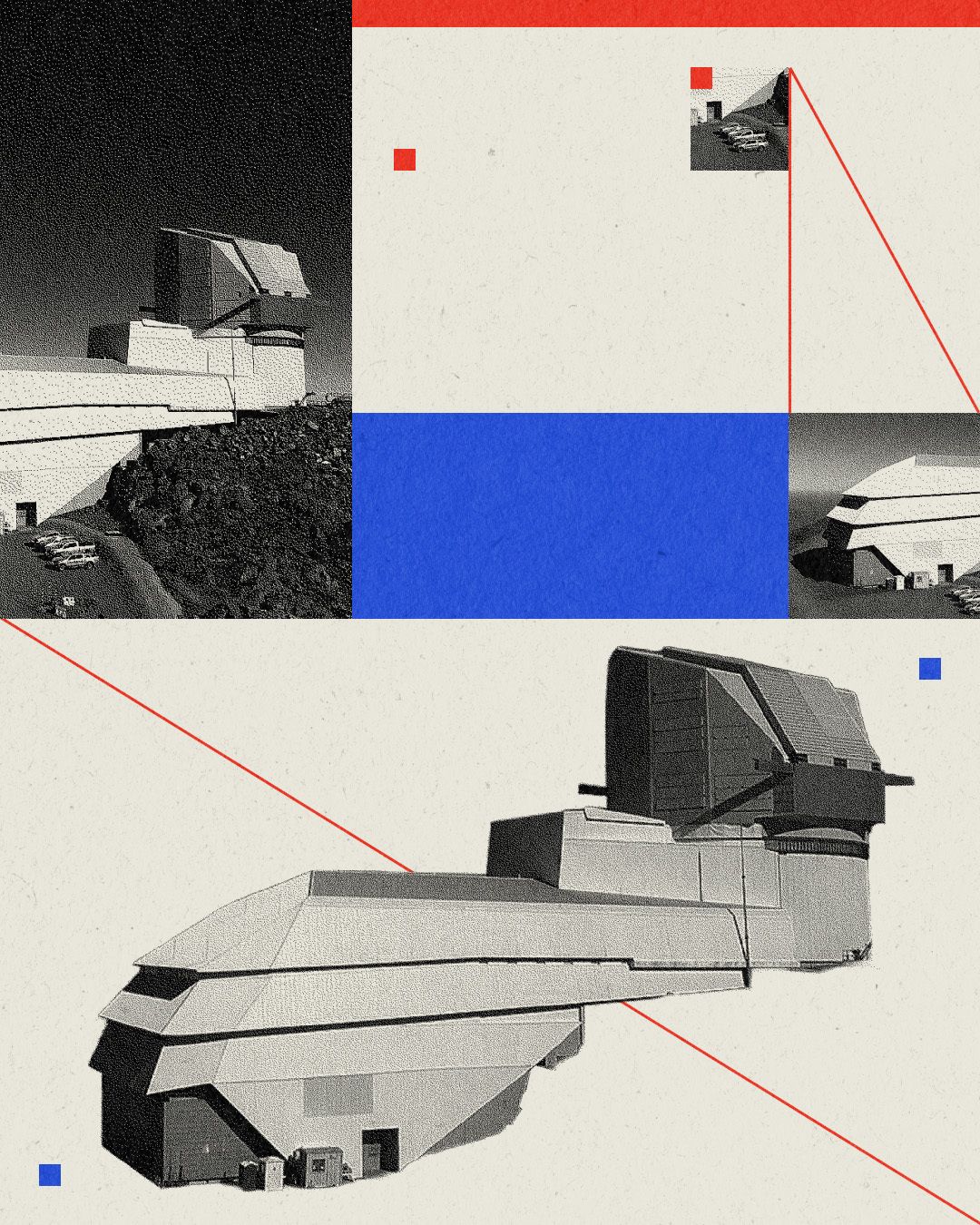
Despite becoming fully operational only in late June, it’s discovered at least 35,000 new asteroids — and of these, 47 are near-Earth asteroids. “Not too bad for a telescope that just ended commissioning,” says Pedro Bernardinelli, an astronomer at the University of Washington.
Those at NASA’s Planetary Defense Coordination Office in Washington, D.C. – those tasked with protecting every single one of us from a cosmic catastrophe – fund a variety of telescopes designed to spot asteroids (and comets) close to home, from the semi-automated ATLAS array (with telescopes in Hawaii, Chile and South Africa) to the Catalina Sky Survey (based in Arizona). Thanks to their hard work and cooperation with other telescopes around the world, they’ve made incredible progress: pretty much all the hundreds of huge asteroids capable of ending civilization have been found, and none pose a collisional threat.
Unfortunately, of the roughly 25,000 near-Earth asteroids potentially capable of vaporizing a large city — those 460 feet long — just under half have been identified. There are also around 230,000 asteroids 165 feet across orbiting close by; these can explode in mid-air with the force of a nuclear weapon, ruining much of whichever unlucky city lies below.
Nobody wants to be randomly blasted to smithereens by an asteroid.
NASA, and its research partners at home and overseas, have endeavored to ensure we can avoid this ignoble fate.
It certainly looks likely that, with years of advance notice before an Earth impact, a nuclear weapon-armed spacecraft could knock an asteroid off course — or, if it’s a smaller space rock, obliterate it. And in 2022, NASA tested out one method of global salvation by smacking an uncrewed spacecraft into a (harmless) city-killer-size asteroid named Dimorphos to see if they could change its orbit around the Sun. The Double Asteroid Redirection Test, or DART mission, as it was known, was a spectacular triumph.
Support Supercluster
Your support makes the Astronaut Database and Launch Tracker possible, and keeps all Supercluster content free.
SupportIrritatingly but understandably, you can’t deflect or destroy an asteroid that you cannot see. That means we must find them before they find us. NASA’s ground-based telescopes are great, but they can only see certain patches of space at any one moment, and Earth’s substantial atmosphere and sunlight-reflecting satellite swarms frequently obscure their line of sight.
Keen to accelerate its reconnaissance efforts, NASA is launching the long-delayed Near-Earth Object (NEO) Surveyor space telescope in September 2027. Soon after, it’ll scoot over to a point between Earth and the Sun and open its infrared eye.
Asteroids show up far more clearly in infrared than in visible light, a bit like how you can see fireflies at twilight. Infrared light also gives astronomers a more accurate way to determine their size, which is a huge deal: for every doubling of an asteroid’s length, its destructive kinetic energy jumps by a factor of eight. And thanks to its ability to filter out the Sun’s brilliant, dazzling glare, NEO Surveyor will spy countless asteroids that other surveys will miss.
Rubin, though, will also come in clutch.
Its car-sized digital camera is the world’s largest; it has a 3,200-megapixel resolution and effectively a hyper-wide-angle oculus, meaning it can take visible light snapshots of the sky 40 times the area covered by a full Moon. Its house-sized nest of mirrors means that it can also capture extremely faint starlight, allowing it to see both very small and very distant objects.
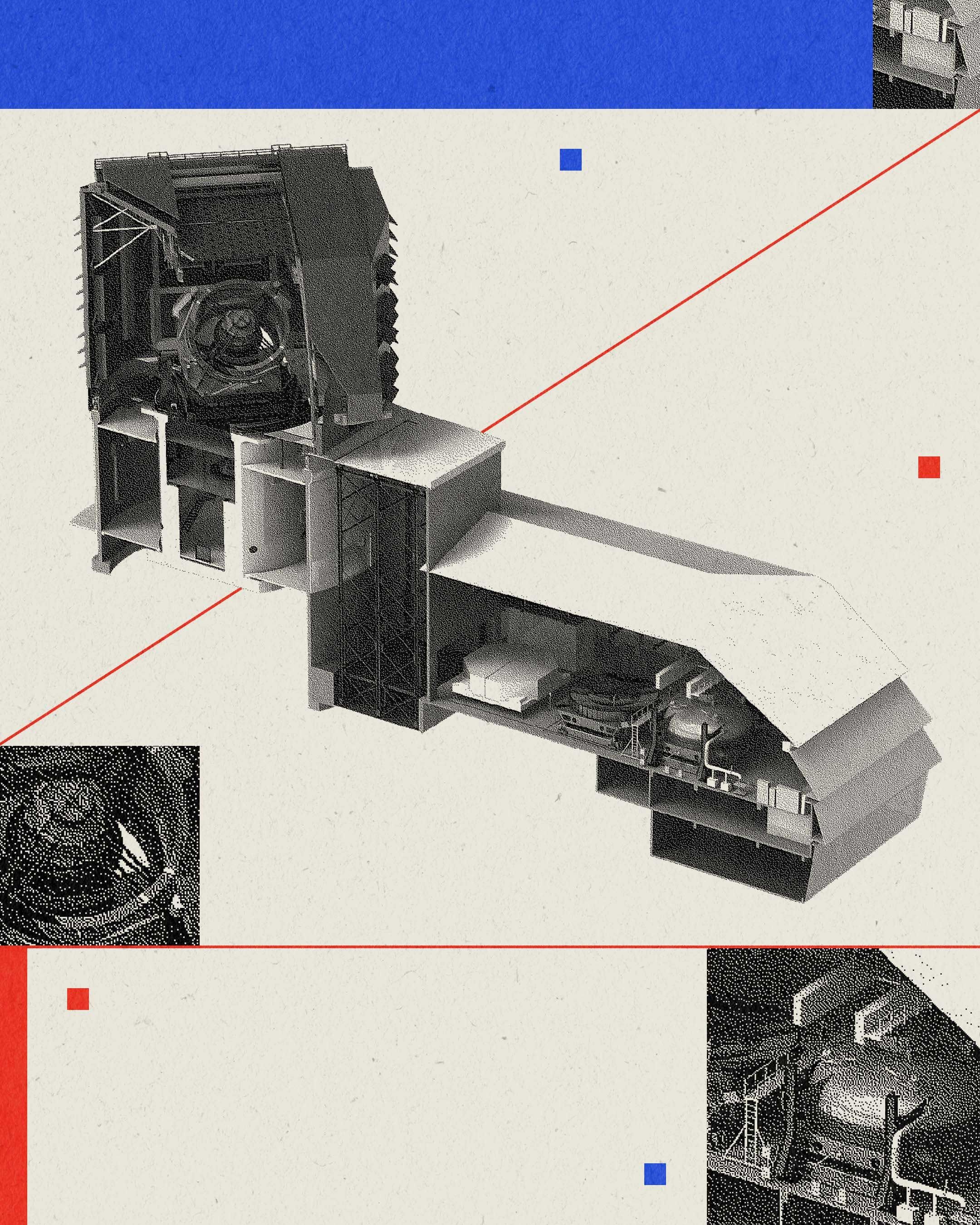
By chronicling everything that glimmers in the entire visible night sky over the next decade, scientists hope to answer two of the greatest questions in cosmology. What is dark matter, the invisible glue that seems to keep things like galaxies from spinning themselves apart? And what is dark energy, the peculiar force that’s stretching apart the very fabric of reality?
This technological sophistication also means that “Rubin is going to observe a tremendous amount of asteroids — in near-Earth space, the Main Asteroid Belt, and beyond,” says Cristina Thomas, a planetary astronomer and planetary defense researcher at Northern Arizona University.
Rubin — funded by the National Science Foundation and the U.S. Department of Energy — will be a fantastic complement to NEO Surveyor. While the latter is specialized in discovering larger, darker asteroids (and comets) that don’t reflect much visible light – including many that fly about interior to Earth’s orbit – Rubin “will go deeper, finding smaller and more distant objects,” Bernardinelli says. “The two surveys will work super well together, and will both substantially contribute to our planetary defense capabilities.”
Using computer simulations, astronomers predict that Rubin will spotlight an almost ludicrous number of asteroids. This includes 3.7 million new asteroids in the belt between Mars and Jupiter, and 89,000 new near-Earth asteroids. To put it another way, “Rubin is going to find 2.3 times the number of near-Earth asteroids found by humans to date,” says Meg Schwamb, a planetary scientist and astronomer at Queen’s University Belfast in Northern Ireland.
Over the past year or so, Rubin was subjected to a gauntlet of tests to make sure it would work as planned during its 10-year-long survey. In mid-2025, it opened its eye for a total of 10 hours — and it caught 1,500 new asteroids on camera. This past April, a slightly longer perusal of the night sky resulted in the discovery of 11,000 new asteroids. Of these, 33 were previously unknown near-Earth asteroids.
While NASA’s ultra-focused NEO Surveyor will lead the charge in protecting the planet, Rubin will play a major supporting role, all while decoding the secrets of the universe. “Early results suggest that it will be phenomenally successful,” says Thomas. And all eight billion of us will be safer as a result.