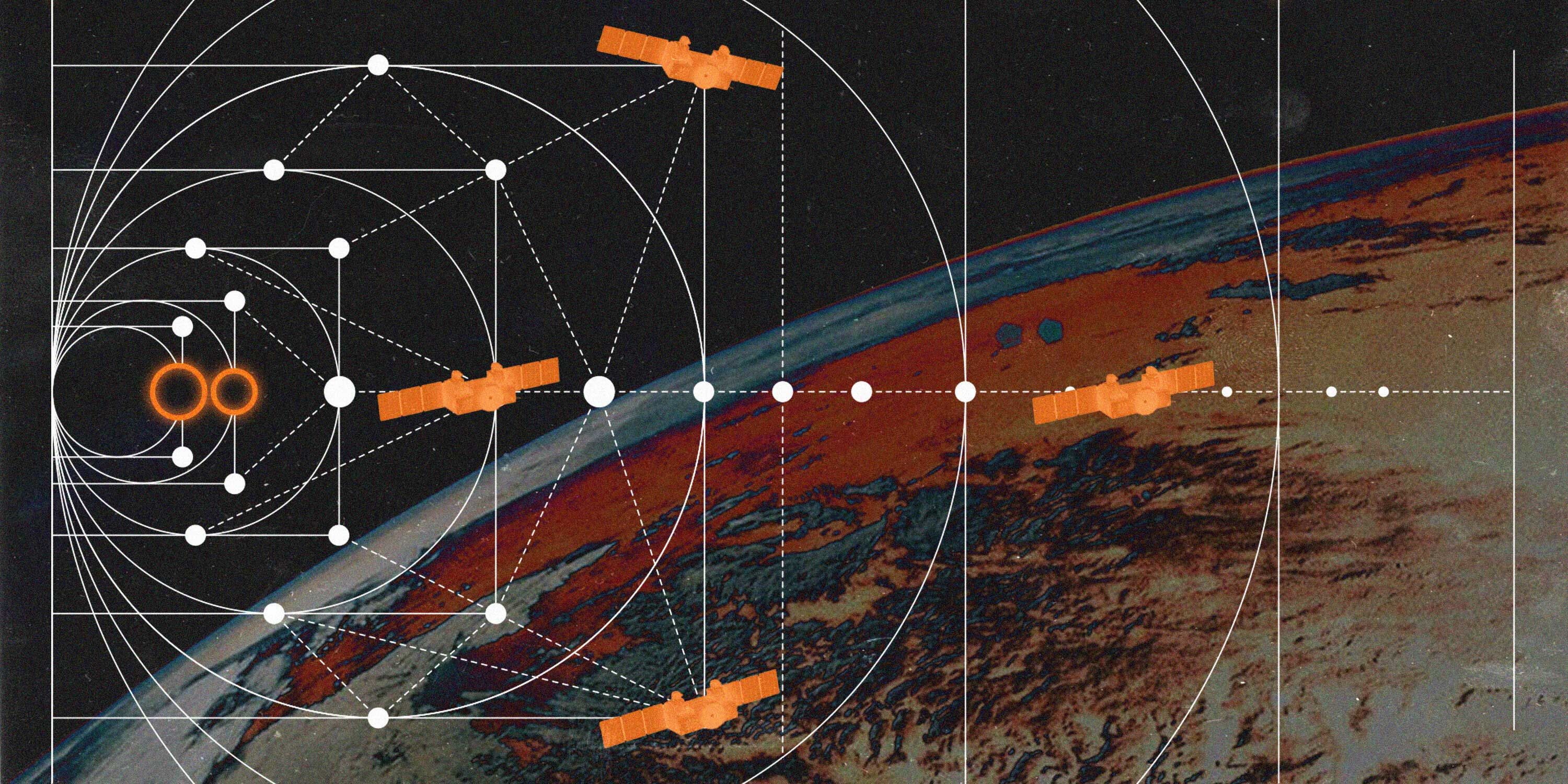
Technical problems have plagued Russia’s fledgling Starlink-like satellite megaconstellation RASSVET since its first launches
But analysts say that despite the apparent teething problems, RASSVET is set to give Russia a distinct advantage and self-sufficiency in the war against Ukraine, and possibly against Europe in the future.
A batch of RASSVET satellites launched in March this year failed to reach their operational altitude of 500 miles (800 kilometers) and is reportedly lingering in a much lower orbit of around 310 miles (500 km) above the planet. On top of that, two satellites appear to be spiraling back toward Earth, and one has already deorbited.
The glitches, however, don’t mean Russia’s effort to deploy its own low-Earth-orbit, high-bandwidth, military megaconstellation is failing. Earlier reports suggest that Russia can already rely on RASSVET — Russian for Daybreak — to beam connectivity to Ukrainian territory for several hours a day, and, although no firm proof has been found yet, some think they may even have conducted drone strikes using the system.
“The recent targeted attacks on the Ukrainian Security Services (SBU) building in Kyiv and a train engine near the Polish border crossing have followed patterns that sound like they could not be supported by a continuous connection to a mesh network,” Marc C Lange, a Berlin-based defense advisor and author of the Tech Wars newsletter, told Supercluster. “And if it was piloted by first-person vision, then there’s only one option left.”
The attack in Kyiv, for example, precisely targeted the office of SBU’s chief Oleksandr Poklad, suggesting a level of accuracy unlikely to be achievable with AI. The Shahed mesh networks, which beam connectivity from one Shahed to the next, can reach up to 220 kilometers from a source antenna located in Russia-controlled territory, according to some sources. But that works only as long as the drones remain at a high altitude.
Even if it has not happened yet, Russian long-range drone strikes controlled via RASSVET are a matter of time. Once the full constellation of up to 900 satellites is up and running (which Russia expects by 2030), the coverage will make it possible for them to guide long-range drones not just all over Ukraine, but across the whole of Europe.
Racing to Replace Starlink
Before February 2026, Russia relied on SpaceX’s Starlink to guide drones beyond the reach of conventional radio links. But then, SpaceX agreed to cut Russia’s access. The Ukrainian government rolled out a registration system that requires Starlink users to register their terminals, only allowing those on the whitelist to connect from Ukraine’s soil.
Russia’s access to Starlink had been a serious threat for Ukraine.
Starlink mini-terminals had been found on Russian long-range kamikaze drones hundreds of kilometers from the frontline. With RASSVET, this threat has returned.
For Russia, the loss of Starlink was a blow, affecting not just their long-range attacks, but temporarily collapsing command and control operations along the frontline. Since then, Russia has been racing to find alternatives. They attempted to use the Yamal constellation of telecommunication satellites that reside in geostationary orbit some 22,000 miles above Earth. But the terminals were too clunky, and the extreme orbital distance caused too much signal latency for precise drone piloting. Russians also experimented with stratospheric balloons, but it’s not clear how successful those tests were. Some experts doubted the intense winds in the stratosphere above Eastern Europe would allow the balloons to stay in place long enough to provide stable connectivity.
It is no surprise, then, that Moscow treats Rassvet as “a matter of life and death,” said Samuel Bendett, an analyst at the Center for Naval Research (CNA) who specializes in Russian military technology. Many Russian officials have been critical of the prolonged dependence on American systems and want to see the military being fully served by domestic tech, he added.
“Even if they only have intermittent daily access to their own satellites over Ukraine, that's going to be a big advantage,” Bendett told Supercluster.
Some analysts note that Russia is, in fact, making faster progress dealing with its satcom dependencies than Europe, which is still years away from the first launches of its Infrastructure for Resilience, Interconnectivity and Security by Satellite (IRIS2) constellation. Currently, Europe has no satcom resources to enable drone warfare and help Ukraine if it were to lose access to Starlink.
Ukraine, unlike Europe, views the risk as acute and has also begun developing a domestic alternative. But few details are available. According to reports, two demonstration satellites may be in orbit at the moment.
Support Supercluster
Your support makes the Astronaut Database and Launch Tracker possible, and keeps all Supercluster content free.
SupportRussia, on the other hand, appears to be aiming for a speedy deployment of RASSVET. Bendett says that Moscow-headquartered satellite aerospace company Bureau 1440 began developing the constellation in 2020, before the invasion of Ukraine. In 2023, Russia launched three demonstration missions — RASSVET-1, -2 and -3. Two batches of 16 operational satellites followed in March and July 2026, establishing basic connectivity over Ukraine.
On the Way to Global Reach
The $5.6-billion constellation, co-funded by the Russian government and through private investment, should balloon into 900 satellites by 2035, providing high-speed connectivity with data rates up to 1 Gbps and latency under 70 ms all over the world.
According to Moscow’s official plans, there could be 156 RASSVET satellites in space by the end of this year, rising to 300 by the end of 2027 and to 600 by late 2028. For comparison, Europe will only begin launching IRIS2 in 2029.
Bendett doubts Russia will meet those ambitious targets.
That, however, doesn’t make the program any less dangerous.
“Even if Russia gets about 200 satellites into space by the end of 2027, that will already be enough to provide military coverage over Ukraine,” he says. “If they grow it to 400 and not 600, by the end of 2028, that will give them significant coverage over the areas they are interested in, which is mostly the former Soviet-controlled space [in Eastern Europe] where the potential clash with NATO is going to take place.”
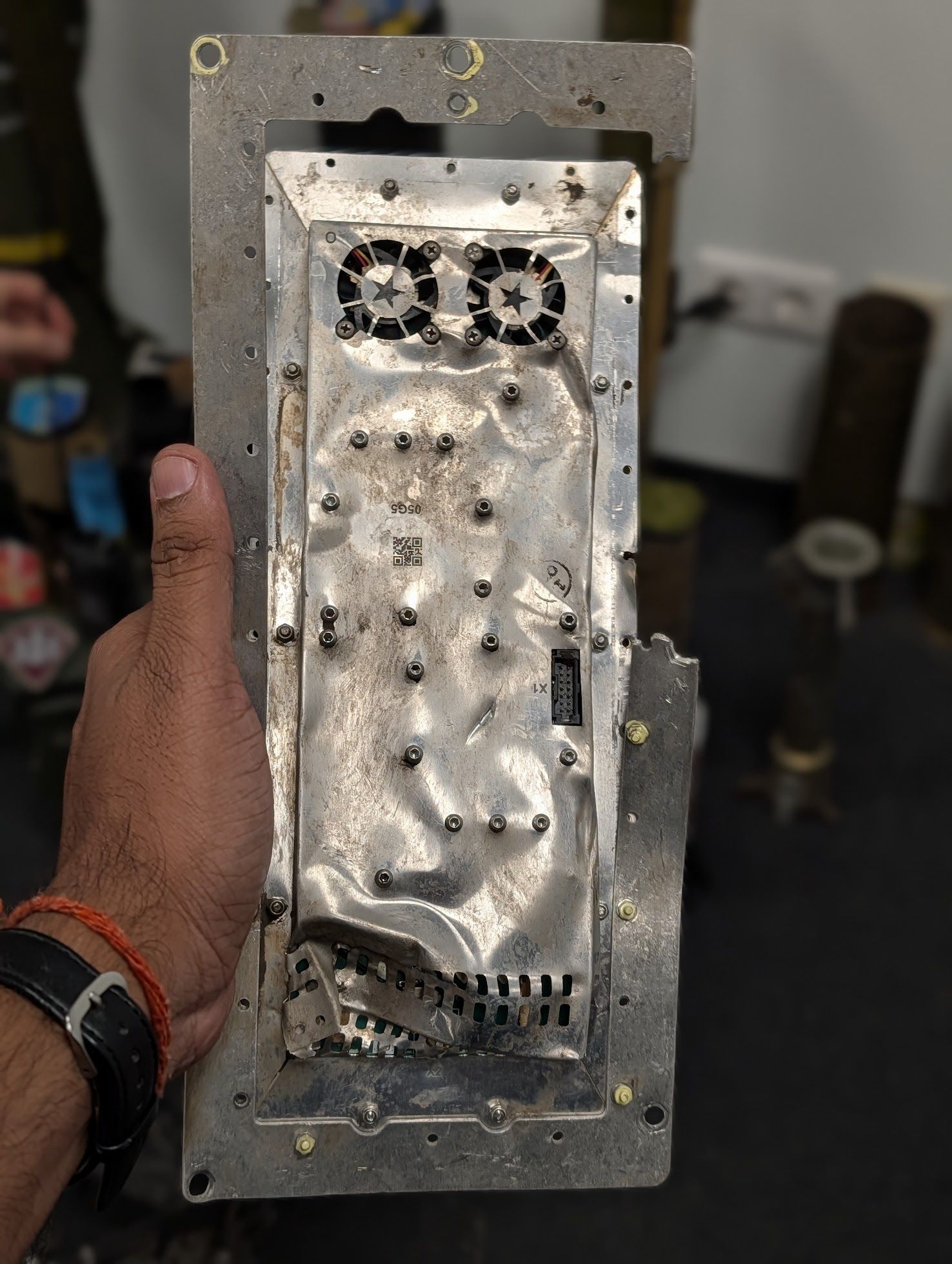
Radio and Power unit from a Shahed drone shot down over Kyiv. Credit: Robin Seemangal
Lange agrees that despite the reported technical setbacks, Russia’s ability to deploy RASSVET shouldn’t be underestimated.
“We should not allow ourselves the arrogance to think that Russia cannot build this,” he told Supercluster. “I was among the people who doubted that Russia would be able to sustain progress in production, launch, and going operational due to its expenses in the war in Ukraine. But my impression and the impression of many people I speak with is that Russia has fully understood the necessity and the existential role of RASSVET.”
Bendett warns that not even the sanctions imposed on Russia in 2014 and strengthened in 2022 appear to be slowing progress. The sanctions prevent Russia from purchasing high-end technologies, including electronics and software that might be used in the production of weapons. But Russia has found a way to bypass the sanctions by purchasing the technology it needs via its allied countries.
“Russia still depends a lot on imported commercial technology,” said Bendett. “A lot of their advanced UAVs, their missiles and rockets are full of Western components. The sanctions have not been effective in stopping the Russian defense industry or limiting their development of advanced models and weapon types.”
Juliann Süß, a space defense researcher at the German Institute for International and Security Affairs, said indications exist that Russia might be relying on China to provide a large portion of the high-tech components and possibly even the bulk of the satellites.
“The Russian space industry has, on top of the sanctions, been dealing with aging, decaying infrastructure,” Süß told Supercluster. “They don’t have the sort of workforce that they would require; they have a problem with brain drain. It would make sense for China to be involved in this because for the Russian space industry, where they are currently at, to build the capacity to build such a mass of satellites and launch them on time, that’s really a big ask.”
The Technological Leap
Regardless of who builds RASSVET, with the constellation on its way to orbit, Russia has once again upped the stakes in the tech race defining the war in Ukraine. Lange warns the development comes at about the same time as the dangerous jet-powered Shahed drones, which have thwarted Ukraine’s air defenses in recent months. These new killer UAVs travel up to three times faster than older, propeller-driven models, making them exceptionally hard to take down with existing interceptors. Russia is unleashing over 2,500 jet-powered Shaheds per month onto Ukrainian cities, wreaking destruction.
Direct control via satellite will further increase the drones’ precision, flexibility and reach.
“We are in the middle of a technological leap,” said Lange. “The level of technological convergence that is happening is why these developments are so dangerous. Many things had to happen for Russia to be able to strike a thousand kilometers away from where the operator is, with precision and large payload.”
Ukraine, which has managed to cripple Russian infrastructure with strategic long-range drone strikes, might soon find itself in a weakened position. In August, Ukraine asked SpaceX’s CEO Elon Musk to allow it to use Starlink guidance for strikes deeper in Russian territory. The request has so far been denied. With RASSVET, Russia does not need to ask.